




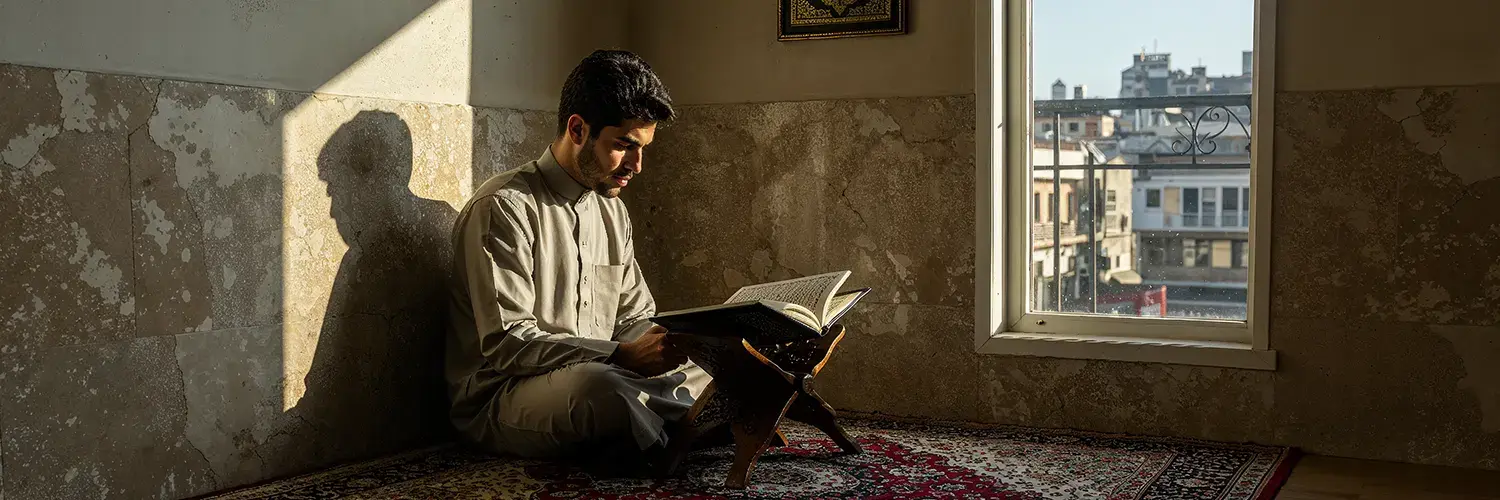
Reciting Quran verses for anxiety and depression is a practice rooted deep in Islamic tradition, used by believers for centuries as a source of inner stability, hope and emotional healing. The words of Allah ﷻ carry a calming power that no human language can match.
This guide explores the most powerful verses for emotional struggles, the spiritual logic behind their effect and how to build a daily practice that genuinely supports your mental well-being without ignoring the importance of professional help when needed.
Table of Contents
Anxiety and depression are not signs of weak faith. The Quran itself acknowledges that human beings feel sadness, fear and emotional distress even the Prophets (علیھم السلام) experienced moments of deep grief.
The Islamic perspective on mental health treats emotional pain as a real human experience that deserves attention, care and remedy.
Islam recognizes anxiety, sadness and emotional hardship as natural parts of human life. Even the Prophets (علیھم السلام) experienced moments of grief and distress. The Quran approaches the human heart with mercy, encouraging believers to seek patience, prayer and trust in Allah ﷻ during difficult times.
The effect of Quranic recitation on emotional states is something millions of Muslims have personally experienced. Modern research has also begun to study why this happens.
The combination of meaningful words, calming rhythm and spiritual intention creates a unique psychological effect.
The act of recitation engages the mind and heart simultaneously:
This is the spiritual healing in Islam that countless believers describe as not magic, but a divinely designed response of the human soul to its Creator's words.
Certain verses are specifically known for their calming and uplifting power. Reciting them with focus, even in short doses, can shift the heart's state remarkably.
These healing verses from the Quran are widely recommended:
Each verse carries a specific message: comfort, reassurance, perspective. Reciting them with even basic understanding transforms them from words into lived guidance. The Quran's ability to address fear and emotional turmoil is explored further in how the Quran guides us to overcome fear and doubt.
Beyond individual verses, certain Surahs are recited regularly by Muslims facing anxiety, fear or sadness. These Surahs combine multiple themes of mercy, protection and reassurance.
The most commonly recited Surahs for emotional struggles include:
Among all these, Ayatul Kursi for protection holds a uniquely powerful place. Believers recite it after every prayer and at bedtime, finding in it a shield that calms both mind and soul.
Its verses describe Allah's authority and mercy in a way that anchors the racing mind. In moments of overwhelm, this single recitation reminds the heart of who truly holds control.
Dhikr the remembrance of Allah ﷻ through short phrases is one of the most accessible spiritual tools for emotional calm. It requires no book, no specific time and no formal setting.
Dhikr for stress relief works precisely because it interrupts the cycle of anxious thinking with focused, repetitive remembrance.
These short phrases are especially effective during anxious moments:
Reading verses occasionally helps, but a consistent daily practice is what creates lasting emotional benefit. The goal is not perfection, it is presence.
A sustainable daily routine looks like this:
This entire routine takes under twenty minutes daily. Yet practiced consistently, it builds remarkable emotional stability.
Pairing recitation with understanding deepens the effect significantly. Even a basic study of verse meanings turns daily reading into reflection, which is exactly why studying Quran Tafseer is important for every Muslim seeking real spiritual benefit.
Reciting Quran verses is a powerful spiritual practice, but it does not replace professional mental health support when needed.
The Prophet ﷺ taught Muslims to "tie your camel and trust in Allah." This principle applies directly to mental health.
A complete approach to anxiety and depression includes:
Seeking therapy or medical help is not a sign of weak faith. It is part of taking responsibility for your well-being, exactly as Islam encourages. The Quran and Sunnah offer immense guidance for life's challenges, and seeking help through Quran and Sunnah is meant to support qualified professional care, not replace it.
Even sincere believers can fall into patterns that limit the benefit of their spiritual practice. Recognizing these mistakes early protects your journey.
The most important shift is moving from "fixing" anxiety to building a long-term relationship with the Quran that supports your emotional life.
Emotional healing is rarely instant, but consistent connection with the Quran can gradually bring peace, emotional resilience and spiritual reassurance into daily life. Reciting healing verses from the Quran with reflection and understanding allows believers to strengthen both faith and inner stability during difficult times.
For readers who want to understand these verses more deeply, Noor ul Burhan provides easy Urdu Tafseer and Para-wise explanations designed to make Quranic reflection simpler and more meaningful for everyday readers.
FAQs
1. Which Quran verses are best for anxiety and depression?
Surah Ar-Ra'd (13:28), Ayatul Kursi, Surah Ash-Sharh and the Three Quls are widely recited for emotional peace and reassurance.
2. Can reciting the Quran cure depression?
Quran recitation provides spiritual comfort and emotional support but professional treatment should also be sought for clinical depression.
3. How long does it take to feel calm after reciting the Quran?
Many people feel immediate peace, while deeper emotional stability develops through consistent daily recitation.
4. Is anxiety a sign of weak faith in Islam?
No. Islam recognizes emotional struggles as part of human life, even experienced by the Prophets (علیھم السلام).
5. What is the best time to recite the Quran for peace of mind?
After Fajr, before sleeping and during stressful moments are commonly considered the most calming times.